


Baking Steel. Care guide.
Keep it clean, dry and lightly oiled. Here is how to look after the surface, restore the seasoning and deal with rust when it appears.
Your steel arrives pre-seasoned and ready to use.
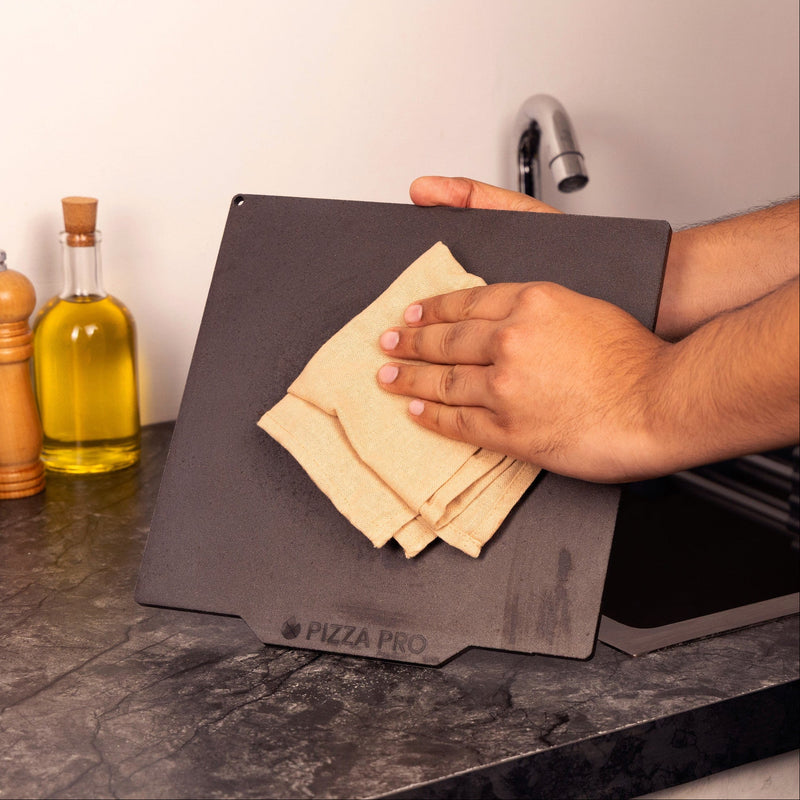
Cleaning your steel
Most of the time, a scraper, a cloth and a little oil are all you need.
- Let it cool completely. Leave the steel in the oven after cooking. Allow at least two hours, and longer if it is still hot. Do not run a hot steel under water to cool it.
- Remove the food. Brush away loose flour and crumbs. Use a scraper to lift off baked-on cheese or toppings. Keep the scraper flat and avoid digging its corner into the surface.
- Wash only when needed. A dry brush or cloth is enough for loose residue. For stubborn food, hand wash with warm water, a little mild dish soap and a brush or sponge. Rinse promptly; do not leave it soaking.
- Dry both sides and the edges. Towel-dry immediately. If moisture remains, put the steel in the oven on low heat to finish drying, then allow it to cool before handling.
- Wipe on a little oil. Spread a very thin film over the clean, dry steel. Use a fresh cloth to wipe away the excess: the surface should not feel wet or greasy.
No dishwasher. No soaking. Both can damage the seasoning and encourage rust. You do not need to scrub the steel back to its original colour after every bake.
Store indoors, completely cool and dry, away from moisture.
Seasoning your steel
Seasoning is a thin layer of oil baked onto the steel. It protects the surface; it is not a coating that must stay perfectly even.
Pizza Pro Baking Steels are pre-seasoned. You do not need to season a new steel before your first pizza.
Re-season only when needed: after removing rust, after heavy scrubbing exposes bare metal, or when the seasoning has worn away.
The method
- Clean. Remove food, loose coating and any rust. Wash with mild soap and water, then rinse.
- Dry. Dry the entire steel thoroughly, including the underside and edges.
- Oil. Apply a small amount of neutral cooking oil to both sides and the edges.
- Wipe almost all of it off. Use a clean, dry cloth. Leave a barely visible film, with no beads, streaks or pools of oil.
- Bake. Place the steel on an oven rack and bake for one hour at 200°C. Keep the kitchen ventilated. There should be no oil dripping from the steel.
- Cool. Turn off the oven and let the steel cool inside. Check the finish once cool; it should feel dry rather than sticky.
One thin coat is better than one thick coat. If stripped areas still need coverage, repeat with another very thin coat. Do not add more oil on top of a sticky layer.
Rust removal
Surface rust usually means moisture has affected exposed steel. It can be removed and does not mean the steel needs to be replaced.
Start gently and move to a stronger method only if rust remains. Work on a completely cool steel.
- Small spots. Rub the affected area with coarse salt and a little cooking oil using a cloth. Wipe away the residue and inspect.
- Stubborn rust. Use a scouring pad or steel wool on the rusty area. Wash and rinse away the loosened material. Abrasive scrubbing may remove some seasoning too.
- If scrubbing alone is not enough. Mix equal parts water and ordinary white vinegar. Dampen the pad with this mixture and scrub the affected area briefly. Do not leave the steel soaking in vinegar. Wash and rinse promptly.
Remove all visible rust, dry immediately, then follow the seasoning method above to protect the exposed surface. Do not simply oil over rust.
Surface changes
A used baking steel will not look like a new one. The aim is a clean, dry, protected surface, not a uniform colour.
Dark patches and colour changes
Brown or black areas, uneven colour and light surface marks are normal as the seasoning develops.
A sticky or greasy surface
This often means excess oil has remained on the surface rather than forming a dry coating. Wash off the tacky residue, dry thoroughly and season again with less oil. Wiping off the excess before heating is the important part.
Flakes or rough, raised deposits
Remove loose material and baked-on food with a scraper or brush. Clean and dry the steel. Re-season if the cleaning exposes bare metal; do not keep adding oil over a thick, loose layer.
Pizza sticking to the steel
Sticking alone does not prove the seasoning has failed. Check that the steel was thoroughly preheated and that the base has had time to set before lifting it.
Smoke when heating
Leftover flour, toppings or excess oil can smoke. Once the steel has cooled completely, remove the residue before the next bake.


